
Discover how Agentic AI works, its real-world applications, benefits, challenges, and the skills needed to build intelligent AI-powered systems.
Introduction: The Next Evolution of Artificial Intelligence
Artificial Intelligence is evolving rapidly. From chatbots that answer questions to generative AI tools that create content, AI is changing how people learn, work, and build technology.
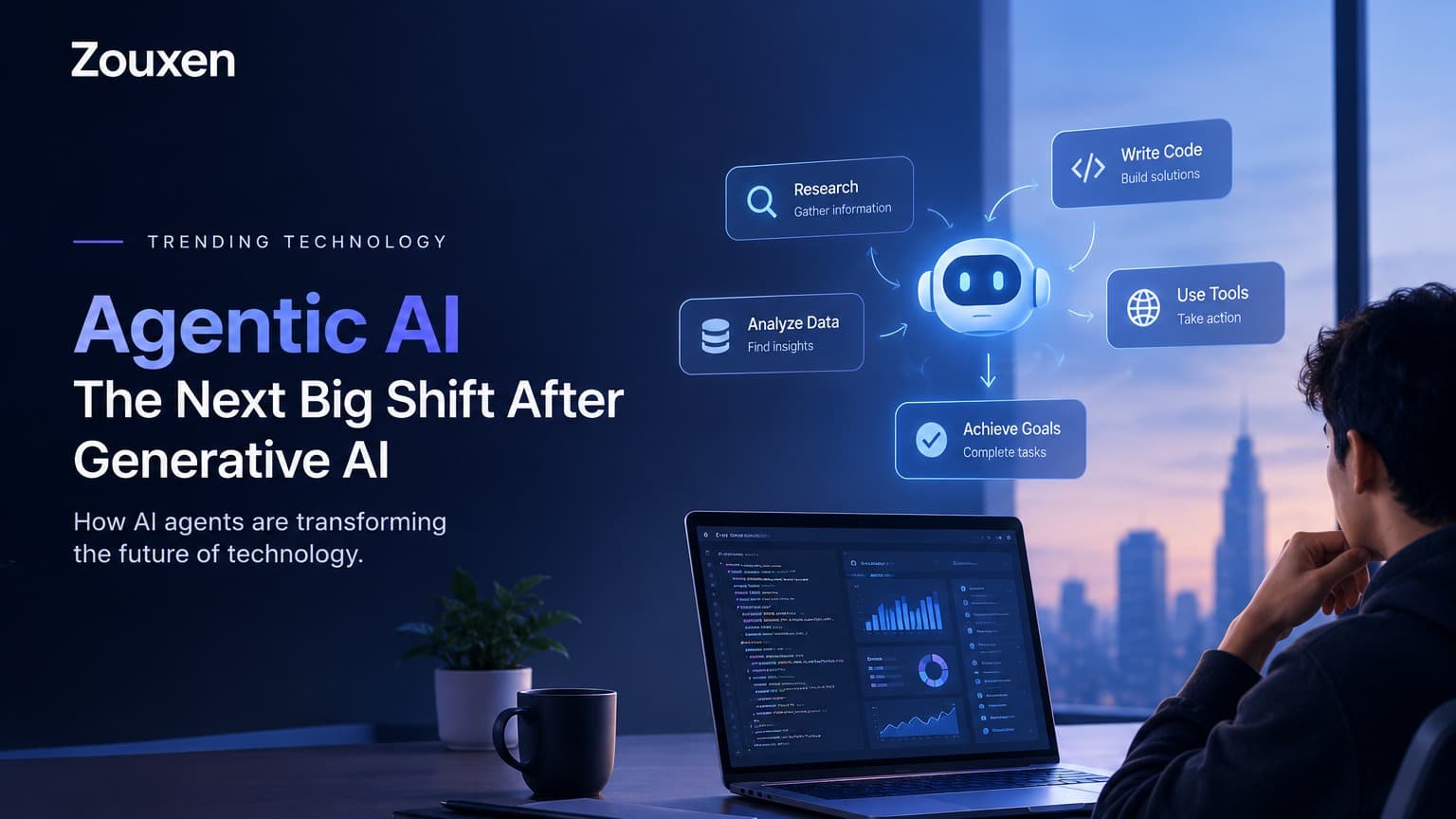
But what if AI could do more than respond to instructions? Imagine an AI system that researches a topic, analyzes information, writes code, uses external tools, and completes a sequence of tasks toward a defined goal.
This is the idea behind Agentic AI. It represents an important direction in AI development, where systems can coordinate multiple steps instead of simply generating a response.
What Is Agentic AI?
Agentic AI refers to AI systems designed to pursue goals by planning tasks, using tools, gathering information, and taking actions within defined permissions.
For example, a traditional chatbot might explain how a sales dashboard works. An AI agent could help analyze a sample dataset, identify trends, generate visualizations, and prepare a summary.
Agentic AI systems often combine large language models, external tools, memory, task planning, and feedback mechanisms. Their capabilities vary, and human supervision remains important.
How Does Agentic AI Work?
1. Large Language Models
Language models help interpret instructions, reason about tasks, and generate plans or responses.
2. Planning and Task Decomposition
Complex objectives are divided into smaller steps that can be executed and evaluated individually.
3. Tools and API Integrations
Agents can interact with databases, Python environments, search systems, and software APIs to perform specific operations.
4. Memory and Context
Some agents maintain relevant information from earlier steps to track progress and support longer workflows.
5. Feedback and Evaluation
Agents can check results, detect errors, and retry certain operations. Testing and human review are still essential.
Agentic AI vs. Generative AI
Generative AI focuses on creating content such as text, images, and code. Agentic AI focuses on coordinating actions to achieve a goal, often using generative models as one of its components.
| Feature | Generative AI | Agentic AI |
|---|---|---|
| Primary purpose | Generate content | Work toward a defined goal |
| Typical workflow | Prompt and response | Plan, act, evaluate, repeat |
| Example | Generate Python code | Generate code, run tests, and suggest fixes |
| Tool usage | Optional | Often central to task execution |
Real-World Applications of Agentic AI
AI-Powered Software Development
Coding agents can assist with code generation, debugging, test creation, and understanding existing software projects.
Data Analytics and Business Intelligence
Agents can help query databases, analyze datasets, identify patterns, and prepare reports for human review.
Customer Support
AI agents can retrieve information, classify requests, draft responses, and assist with approved support workflows.
Research and Knowledge Management
Research agents can gather information from approved sources, compare findings, and organize summaries with references.
Business Process Automation
Organizations can explore agents for repetitive workflows, reporting, information processing, and task coordination.
Why Are Companies Exploring Agentic AI?
- Improve productivity by assisting with repetitive tasks.
- Connect AI models with existing tools and applications.
- Support research, software development, and data analysis.
- Coordinate multi-step workflows with less manual effort.
- Develop new AI-powered products and services.
These benefits depend on the task, system reliability, integration costs, data quality, and the level of supervision required. Security, privacy, and access controls must be considered when deploying agents in real environments.
Skills You Need to Build AI Agents
- Python programming: Learn functions, data structures, error handling, and APIs.
- SQL and data analytics: Learn to query databases, clean data, and interpret results.
- Machine learning: Understand model training, prediction, and evaluation.
- Generative AI and LLMs: Explore prompts, embeddings, context windows, and model APIs.
- Retrieval-Augmented Generation (RAG): Learn how AI applications retrieve relevant external knowledge before generating responses.
- AI agent development: Build workflows that use tools, validate results, and handle errors.
- Project development: Document your work, explain technical decisions, and evaluate results.
AI Agent Projects You Can Build
1. AI Research Assistant
Build an application that gathers information from approved sources and creates a summary with source links.
2. Data Analysis Agent
Create a Python-based agent that explores a dataset, generates charts, and explains key trends.
3. RAG-Based Document Assistant
Build a question-answering system that retrieves information from documents and provides supporting references.
4. AI Coding Assistant
Develop a controlled workflow that generates code, runs tests in a safe environment, and suggests corrections.
Start with a clearly defined objective. A small, reliable project is a better learning experience than a complex system whose results cannot be evaluated.
The Future of Agentic AI
Agentic AI is an important area of AI research and development. As organizations explore more capable models, the ability to connect AI with tools, applications, and business workflows will remain significant.
Adoption will also depend on reliability, governance, security, cost, and measurable business value. Human oversight will continue to play an important role in responsible deployment.
For students and professionals, learning how AI systems work, integrating models into applications, and evaluating their performance can provide a strong foundation for future projects.
Build Practical AI Skills with Zouxen
At Zouxen, we believe learning emerging technologies should go beyond theory. Practical projects help learners connect concepts with real-world applications.
The 8-Week AI & Data Science Internship Accelerator helps learners strengthen their technical foundations and explore modern AI applications through structured learning.
- Python and SQL
- Data Analytics and Machine Learning
- Generative AI, RAG, and LLM applications
- Agentic AI
- 7+ portfolio projects
- Mentor-led sessions and weekend labs
- Career guidance and interview preparation
Explore the program and discover the learning journey: AI & Data Science Internship Accelerator by Zouxen .
Conclusion
Agentic AI represents an important direction in the evolution of AI applications, enabling systems to coordinate multiple tasks using models, tools, and structured workflows.
Its potential depends on thoughtful engineering, reliable evaluation, and responsible deployment. For aspiring AI developers, learning the fundamentals and building practical projects is a valuable way to explore this evolving field.
Learn the fundamentals. Build real projects. Prepare for the future of AI with Zouxen.